
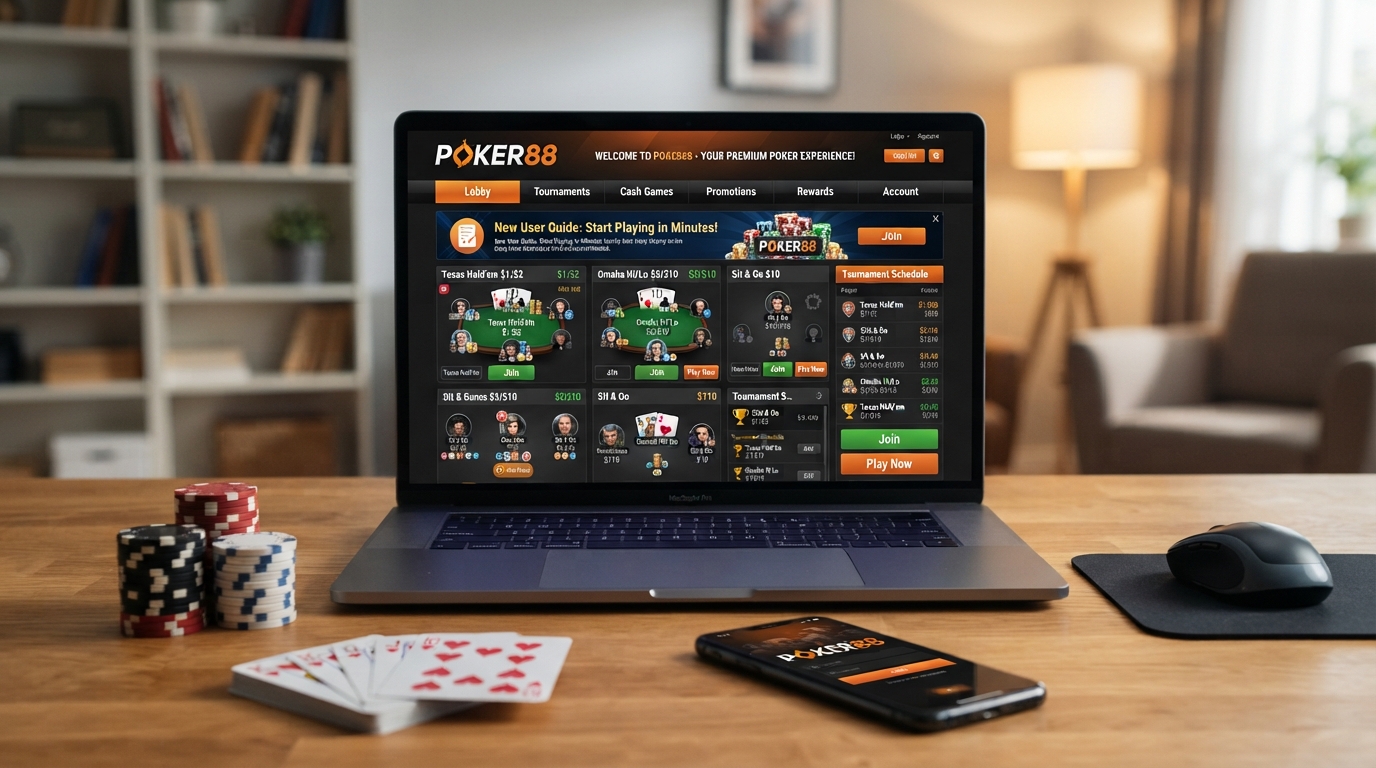
Online poker has become a widely discussed form of digital entertainment, combining traditional card-game rules with online platforms and interfaces. poker88 is a name associated with this type of online poker environment. For anyone researching the subject, it is useful to understand how online poker generally works, what features these platforms may offer, and what considerations should be kept in mind before participating.
What Is Online Poker?
Online poker is a digital version of traditional poker played through an internet-based platform. Instead of sitting around a physical table, players use a website or application to interact with a virtual poker table. Different variations may be available, including familiar formats such as Texas Hold’em and other poker styles.
The basic principles remain similar to traditional poker. Players receive cards, make decisions during different betting rounds, and attempt to build the strongest qualifying hand or persuade other players to leave the round. However, online platforms can introduce additional features such as digital account systems, automated dealing, game histories, and different table formats.
How Does a Poker Platform Work?
A typical online poker platform requires users to create an account before accessing its services. Depending on the jurisdiction and platform, users may be asked to complete age or identity verification. Available games, rules, payment methods, and other features can vary considerably.
Before using any online gambling service, it is important to check whether such activity is legal where you live. Gambling regulations differ between countries and sometimes between regions within the same country. A platform's availability does not necessarily mean that its use is legally permitted in every location.
Why Do People Learn About Poker?
Poker can be interesting from a mathematical and strategic perspective. Players often consider probability, decision-making, risk, and the possible outcomes of different hands. These elements make poker different from games based entirely on predetermined outcomes.
At the same time, poker played for money involves financial risk. Knowledge of probability does not guarantee a profitable result, because individual hands and sessions contain uncertainty. A person can make what appears to be a reasonable decision and still experience an unfavorable outcome.
What Should Beginners Understand?
One of the most important concepts for beginners is that poker involving real money should not be viewed as a reliable way to earn income. Losses are possible, and repeated play can increase financial risks. Young people should not participate in gambling activities, and adults should follow the laws and age restrictions that apply in their location.
It is also useful to understand the difference between entertainment and financial expectations. Treating gambling as a guaranteed source of income can lead to poor financial decisions. Anyone who chooses to engage in legal gambling should understand the rules, potential losses, applicable restrictions, and available safeguards before participating.
Is Online Poker Safe?
Safety depends on several factors, including the platform, local regulations, account security, and the user's own decisions. People researching an online poker service should look for clear information about its rules, privacy practices, age requirements, and legal status.
Overall, understanding online poker requires more than learning how the cards work. It also means considering probability, financial risk, legal requirements, privacy, and responsible use. With these factors in mind, readers can approach the subject as an informed topic rather than assuming that online poker guarantees entertainment, winnings, or financial returns.